+1 (302) 499-8999
 +91 95915 30490

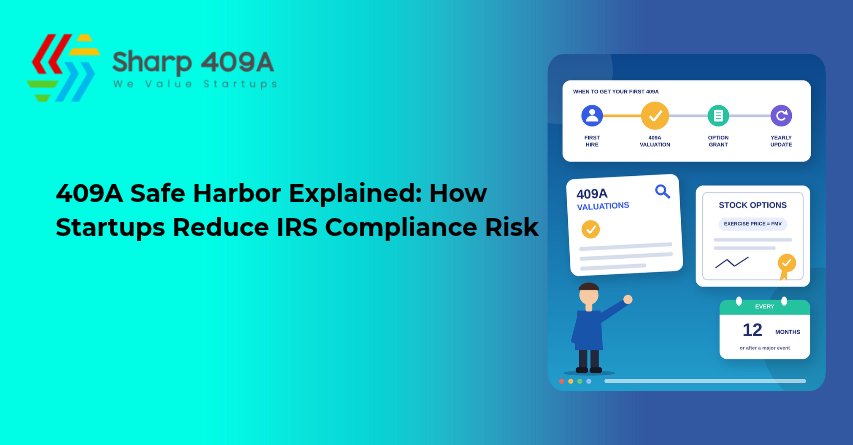
409A Safe Harbor Explained: How Startups Reduce IRS Compliance Risk
For startups issuing stock options or other forms of equity compensation, determining the fair market value (FMV) of common stock is an important part of maintaining tax compliance. While startup business valuation can help assess the overall value of a

Market, Income And Asset Approaches In 409A Valuation: When Is Each Used?
A 409A valuation sets the fair market value (FMV) of a private company's common stock, the benchmark required under IRC Section 409A when granting stock options or equity. Because private shares don't trade on an open exchange, independent appraisers apply
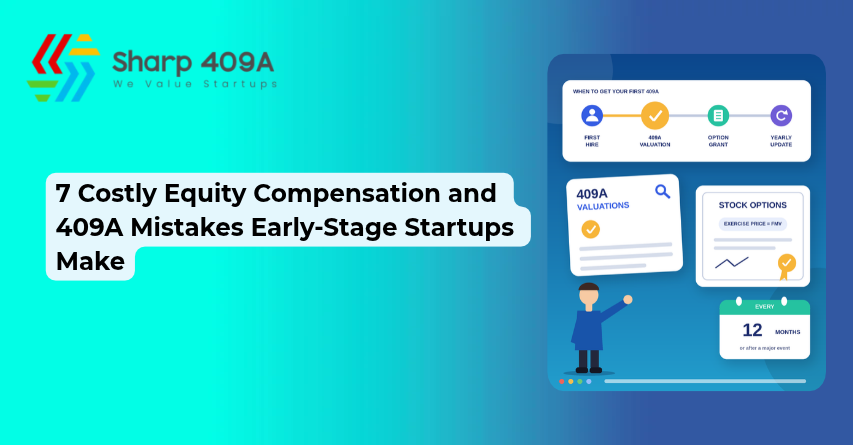
7 Costly Equity Compensation and 409A Mistakes Early-Stage Startups Make
Equity compensation can be one of the most effective ways for early-stage startups to attract and retain talented employees without putting excessive pressure on cash flow. Stock options, restricted stock, and other equity incentives can give employees a meaningful stake

When Does a Startup Need Its First 409A Valuation? A Founder’s Guide
For many founders, a 409A valuation may not seem urgent during the early stages of building a business. There are products to launch, customers to acquire, investors to meet, and employees to hire. However, once equity compensation becomes part of

Fair Market Value Modeling for Inventory Heavy Startups: Unique 409A Challenges and Assumptions
For inventory-heavy startups, accurate 409A assessments require a nuanced understanding of how stock levels impact liquidity and overall worth. A robust private company valuation must account for these unique operational variables to ensure compliance. Relying on specialized modeling allows founders
How Investors Interpret 409A Valuation in Fundraising Decisions
Fundraising for startups is often the most critical phase for growth, where founders must balance equity distribution with capital needs. During this process, a precise startup valuation is essential, as it dictates the strike price for employee stock options and